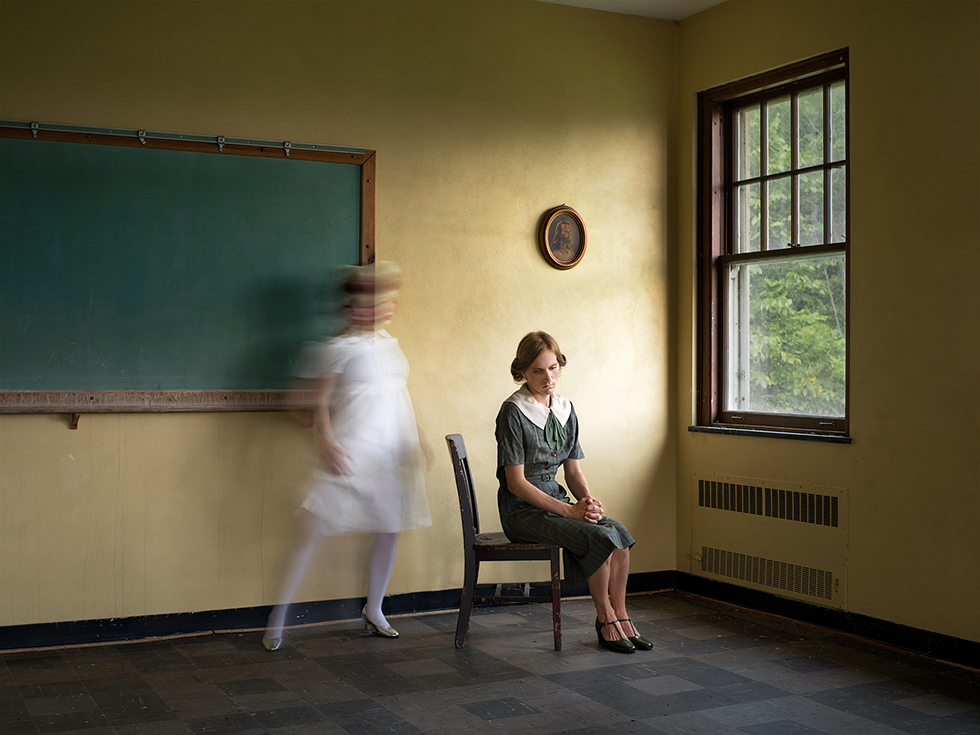
There is something quietly painful about being valued for what you do for other people, yet rarely being asked what you want for yourself.
That is the world Amanda Metcalf knows.
At twenty-five, Amanda is intelligent, independent-minded, well educated and deeply devoted to those she loves. She has spent years caring for her dying mother while watching her younger sister, Polly, enjoy the courtships, dances and social attention expected of a young woman of their standing. Even within her own family, Amanda has grown accustomed to being the dependable one rather than the celebrated one.
Then, in 1901, her life changes.
Her widowed father announces that it is time for Amanda to make her own way in the world. What might have felt like rejection instead gives her something she has quietly wanted for years: freedom.
For the first time, Amanda has money of her own, choices of her own and the possibility of building a life that belongs entirely to her. She dreams of dancing again. Perhaps she will open a dance academy. Perhaps she will settle somewhere new. Perhaps she will discover that a woman does not need a husband at all in order to have a meaningful life.
She simply has to decide what that life should be.
From Oxford to the Scottish Highlands
Amanda’s journey takes her away from the familiar academic surroundings of Oxford and north to the small Highland village of Dalmara, where her pregnant sister has settled with her husband.
She does not arrive intending to stay.
In fact, Amanda is not particularly impressed by what she finds.
The customs are unfamiliar, the weather is disagreeable, the house is far too small for her liking, and the inhabitants of the village do not necessarily behave according to the social rules she has spent her life observing.
Then she meets Caleb MacIntosh.
Caleb—or “Big Tosh,” as practically everyone except Amanda seems determined to call him—is a Highland farmer whose first encounter with Amanda is anything but romantic.
They irritate each other almost immediately.
Amanda finds him uncultivated, infuriating and far too comfortable staring directly at her. Caleb finds her beautiful, sharp-tongued, privileged and endlessly entertaining. Their conversations quickly become contests in which neither seems willing to surrender the final word.
And that is precisely what makes their relationship so enjoyable.
There is no polished courtship in which two perfect people behave perfectly. Their connection grows through teasing, arguments, embarrassment, stubbornness, attraction and the gradual discovery that each has badly underestimated the other.
Amanda initially sees only a rough Highland farmer.
She soon discovers a thoughtful man with books, intellectual curiosity, ambition and wounds he has spent much of his life hiding.
Caleb initially sees an elegant Englishwoman who could hardly understand his world.
He discovers a woman willing to roll up her sleeves, challenge him, improve whatever she touches and love with a frightening degree of sincerity.
Neither remains quite the person they were before meeting the other.
A Love Story, But Not Only a Love Story
It would be easy to describe A Woman of Little Consequence simply as a historical romance.
It certainly contains romance—plenty of it.
But beneath Amanda and Caleb’s turbulent relationship lies a larger story about identity.
Amanda’s deepest uncertainty is not whether she is attractive enough, wealthy enough or accomplished enough. It is whether she truly matters.
That question has followed her for years.
She has lived in the shadow of a younger sister who attracted admirers more easily. She cared for a mother whose complicated past continues to influence the family after her death. Even her father, in his detached academic fashion, has allowed Amanda to believe that marriage may simply have passed her by.
So when Amanda is finally given independence, she begins by imagining freedom in practical terms: her own money, her own cottage, her dancing and perhaps her own academy.
But independence is only the beginning.
What follows is a much harder education in self-worth.
Amanda must learn the difference between being needed and being loved.
She must discover that generosity does not require surrendering one’s dignity.
She must confront uncomfortable truths about the people closest to her.
And perhaps most difficult of all, she must accept that being strong does not make someone immune to insecurity.
The Complicated Bonds Between Sisters
One of the most interesting relationships in the novel is not romantic at all.
It is the relationship between Amanda and Polly.
The sisters love each other, but their relationship carries years of comparison, sacrifice, jealousy and misunderstanding beneath that affection.
Amanda sees herself as the protector.
Polly has often been the one protected.
Yet neither fully understands what the other has envied.
Amanda looks at Polly’s marriage, children and effortless femininity and occasionally sees the life she was never offered. Polly looks at Amanda’s financial independence and freedom to choose her future and sees possibilities she surrendered when she married.
That tension becomes increasingly important as the story develops.
Their bond is tested by marriage, money, motherhood, resentment, family secrets and choices that cannot simply be forgotten.
And this is where the novel avoids presenting family love as something neat.
People can love one another and still hurt one another badly.
A sister can be both cherished and resented.
Forgiveness can exist without pretending that nothing happened.
By the novel’s later chapters, Amanda’s relationship with Polly becomes central to understanding what kind of woman Amanda has become.
Two Worlds, and a Woman Between Them
The novel also moves beyond Scotland.
Amanda’s Italian heritage opens another door in her life, taking the story into Florence and revealing a family history far larger and more complicated than she had understood while growing up in England.
This expansion gives Amanda an interesting position between worlds.
There is Oxford, shaped by education, propriety and her father’s intellectual life.
There is Dalmara, where farming, community, gossip, work and Highland traditions create an entirely different rhythm.
And there is Florence, connected to her mother’s past, wealth, family legacy and a part of Amanda’s own identity that she must rediscover.
Yet the question eventually becomes less about where Amanda belongs geographically and more about where she feels known.
Home, the novel suggests, is not necessarily the place where a person was born or raised.
Sometimes it is the place where she finally becomes herself.
Amanda Metcalf Is Not a Perfect Heroine—and That Is Her Strength
Amanda can be snobbish.
She can interfere where she probably should not.
She makes assumptions.
She speaks before thinking.
She can be dramatic, jealous, impulsive and spectacularly stubborn.
She is also funny, loyal, intelligent, affectionate, resilient and astonishingly generous.
That combination gives her personality.
She does not read like a woman created merely to represent an ideal. She frequently gets things wrong, particularly when her imagination begins supplying explanations for other people’s behavior.
Caleb is hardly easier.
He carries his own emotional baggage, communicates badly, retreats when he should speak and occasionally allows pride and insecurity to damage precisely the relationship he values most.
Their marriage does not magically erase those flaws.
Instead, love forces both of them to keep confronting them.
That feels considerably more human than a romance in which marriage is simply the reward waiting at the end of the story.
Here, love is something that continues to require reassurance, humility, forgiveness and occasionally a very difficult conversation.
What Does It Mean to Be “A Woman of Little Consequence”?
The title may initially sound dismissive.
By the end of the novel, it becomes almost ironic.
Amanda spends a significant part of her life believing that other people are somehow more important than she is. Her younger sister is more desirable. Her father has his scholarship. Her mother had her beauty and secrets. The men around Amanda have professions, land and titles that society readily recognizes.
Amanda’s influence works differently.
She builds.
She repairs.
She gives.
She creates homes.
She supports people financially and emotionally.
She brings beauty into places that have gone without it.
She pushes the people she loves to become better versions of themselves, even when they occasionally wish she would stop pushing quite so enthusiastically.
Most importantly, she forgives.
Not because she is weak enough to overlook betrayal, but because she eventually becomes strong enough not to let another person’s failures define the remainder of her own life.
Near the novel’s conclusion, Amanda reflects upon how much of her identity has been tied to caring for everyone else and her fear that she was somehow of little consequence.
Years later, the people around her understand something she has taken much longer to recognize.
She was never insignificant.
Her life has altered theirs.
A Historical Story With a Familiar Question
The world surrounding Amanda belongs to another century. There are horse-drawn carriages, Highland farms, Oxford dons, elaborate Italian households, strict expectations surrounding marriage and reputation, and a social structure very different from the one most readers inhabit today.
Yet Amanda’s central question has hardly disappeared:
What happens when a person who has spent years being useful to everyone else finally begins asking what she wants?
That is what gives A Woman of Little Consequence its emotional center.
Amanda’s story is about romance, certainly. It is also about sisters, marriage, family secrets, motherhood, class, independence and belonging.
But underneath all of those things is the story of a woman gradually realizing that her worth was never dependent upon whether society—or even her own family—recognized it.
By June 1911, the Amanda we see is far removed from the uncertain twenty-five-year-old woman who once wondered what sort of future was left for her.
She has loved.
She has been hurt.
She has forgiven.
She has built a family and a life.
And she has left her fingerprints on nearly everyone fortunate—or unfortunate—enough to be swept into her orbit.
Perhaps that is the quiet joke contained within Diane Coia-Ramsay’s title.
Amanda Metcalf may once have believed herself to be a woman of little consequence.
She never was.